Friday, September 12, 2008

New Photos of Travis 133

Here's the value of the blogs folks! We, in the 133 community, have a new connection. He left a link to his photos, and in a follow-up e-mail, introduced himself to us. Check out the red links below....

Hi Dick,

I found the blog in a Google search yesterday and just thought I'd drop my link on it. I am not a C 133 vet, just a 58 year old guy with a strong interest in old transport aircraft and their systems. I hope my comments about the Nav's work on 133s was technically accurate. I used Loran A myself in commercial fishing back in the day, mostly old APN 9s and even a few APN 4s. I also did celestial nav, mostly just noon sun shots but some star work too. I like navigation, which is a disappearing art now with cheap GPS on the scene.

Your blog was very hard to find for some reason, but glad to know it is there.

Man what an aircraft. I was knocked out by its size. Astounding that one was flying in 2008 without a giant maintenance and logistics org behind it. (Note: I'm sure all 133 crew veterans are also astounded about that!!)


Regards,
Mark Meltzer

To see Mark's 133 photos, click on: http://boeing377.googlepages.com/c133

Also, Mark's web site is fascinating. Lots of "airplane stuff" from a sky-diver's perspective: http://boeing377.googlepages.com/skydive2

Monday, September 1, 2008

Eyewitness Comments & Videos

Thank you Aeroki and Dan H. for your Comments. You've helped connect the rest of us to the true end of an era we all remember well!! Click on Aeroiki's red youtube link below to see his video of the landing.....then click on Cal Taylor's red link at the bottom of the post....

Aeroiki said...

It was a very moving experience to see this plane land at Travis AFB Saturday. It was like watching an extinction. I posted two videos I shot on youtube.com. Others have started to post too so just search for C-133. Among the hits are a video of the roll out of the first Cargomaster!

Cheers,
Aeroiki


Dan H. said...

On Saturday, Aug. 30 I took a trip back in time. It was the mid-60's, the war in SEA was going strong and the sky above Travis AFB was filled with the sight and sound of the mighty C-133. Unknown to most and relegated to Air Force footnote status, those who flew and maintained her will long treasure her memory. Welcome home61999! Dan H.

And Cal Taylor said..

This clip shows C-133A 61999 landing at McChord AFB, WA, 28 Aug 08. There is great sound of those huge propellers. We were also filming at the other end of the field and got great video of the entire movement of the airplane, from taxi to parking to taxi out and takeoff. Turn your sound up high. There will be a DVD in a while that covers the entire operation of moving the airplane from Anchorage, AK to Travis AFB, CA.


http://www.airshowbuzz.com/videos/view.php?v=7027bdddIf

Saturday, August 30, 2008

61999 final shutdown

On 30 Aug 08, the airplane launched on its final flight. Takeoff at McChord was 0800 and landing at Travis at 1101 PDT. At shutdown, the airplane had logged some 18,250 flight hours with more than 6,100 landings. Thanks to all those who made this last flight possible. It will be an excellent display in the Travis Museum. There will be lots of excellent footage from which to create a superb C-133 DVD.

Friday, August 29, 2008

61999 at McChord, 28-30 Aug

The airplane touched down on a cloudy evening at just before 1900. We got really good footage of the roll-out, taxi-in and shutdown. Over two hours, three photographers shot a whole bunch of film, including interior and exterior shots, cargo handling and interviews. On Saturday morning, the subject will be engine start, taxi out, takeoff and departure. Hopefully, the active will be 16, which will take the departing airplane past the camera spot, with Mt Rainier in the background. Pray for clear skies.

There were only some minor squawks, including cracks in the outer pane of the right side forward windscreen. The engineer said not a problem. They are not carrying a high pressurization differential.

Some of the new USAF markings peeled in flight. But, that will not be a problem to fix. It will still be a USAF airplane on landing at Travis.

The engineer says 61999 is a great airplane that has never given much problem, over close to 35 years. The museum is getting a good airplane and he is happy that it is getting a good home.

61999 Now at McChord AFB

First leg successful! Go to Cal Taylor's blog and scroll down to the 28 Aug update for the latest report.

Click on: Cal Taylor's Blog

Thursday, August 28, 2008

61999 to arrive McChord AFB

The airplane now belongs to the Travis Museum. The ferry permit is in hand. Departure from Ted Stevens IAP, Anchorage, AK is at about 1100 local, with ETA to McChord at 1630 today, 28 Aug. There, it will park on the Echo Ramp, near the McChord Museum restoration hangar. If the crew is up to it, there will be a cargo swap this afternoon. Some stuff for the McChord Museum off load, onload of stuff to Travis Museum.

I will be there with still and video camera. There will be a professional videographer, working for the Travis Museum. PAO has been alerted. The plan is to film as much of the approach as possible, plus taxi-in, shutdown, and loading evolution. I hope also to shadow the engineer, during his preflight on Saturday and then to get engine start, taxi-out and takeoff (from a distance). Departure from TCM is probably NLT 0730, to make Travis at 1030.

There was an engine run at Anchorage, all okay, then two flights. One had a video team aboard to document the operation. Shots of takeoff/departure and of landing were also done.

The airplane has been re-militarized with stars and bar, tail number, etc, so it will be a USAF airplane landing at TCM and SUU.

Cal Taylor

61999 ANNOUNCEMENT!

BREAKING NEWS!! Just got the following from Fred Galey, who got it from Chuck (?):

The last C-133 flight will land at Travis on Saturday, August 30, 2008. It is one of the birds that was in Alaska. It is scheduled to land between 10 and 1030 Saturday morning. After landing it will become part of the Travis AFB Air Museum. It has been donated by the fellow that flew them in Alaska. They had to raise $68,000.00 to cover the fuel costs. Chuck

Wish I could be there! I'm sure Cal Taylor will provide photos, and probably videos!

Thank you, Fred!

Tuesday, August 26, 2008

Agent Orange Update

A new Comment was just added to a previous Post on this subject. I've re-Posted the Comment here for better visibility....thank you, Anonymous!

Anonymous said...

"Well, it looks like some of our brethren have sold the rest of us down the river on HR 6562. John Rossie and his cohorts have convinced Filner to modify the bill to the point that it has no chance of ever being passed in the House, much less in the Senate. I am disgusted with the whole thing and just feel that I can no longer believe anything this group has to say."

August 26, 2008 12:43 PM

Saturday, August 23, 2008

23 Aug Update 61999

Please put the word out to the C-133 community that we motored the engines and then started the engines on the 133, all went PERFECT! All four engines fired over without a single hitch, it was truly an exciting moment to see all four engines running, she's a stout old gal!
Speaking of towing, I had to pay $400.00 from our funds to have the 133 towed to the maintenance spot, the person definitely took advantage of us and our predicament.
This is why it is still important for us to put out the word that extra money for incidentals is badly needed!
Tuesday is the date we hope to do the test flight around Anchorage, there is no doubt in mind the 133 will perform flawlessly.
I will keep you posted on our progress,
Best regards from Alaska,
Terry Juran

Monday, August 18, 2008

"True Survivor" Colleague

The following three e-mails were just received by our Book of the Month Reviewer, Rick Spencer (39th ATS Navigator, '62-'65) from Bill Neely (40th ATS C-124s & 1607th Flightline Maintenance Squadron, consolidated maintenance, '55-'58, when the 39th was converting from C-54s to the brand new 133s). So Bill was in Dover when C-133 #54-0146 "augered in, inverted" in Georgetown, DE, with 4 fatalities. Here's his story:

17 Aug 2008

Hi Rick:
You probably don't remember me but I'm one of your high school classmates.
I spent nearly all my adult life in aviation as a mechanic and pilot. Also did about 20 years of skydiving and parachute rigging as a hobby.
I retired from the FAA in 1997.
I was talking to an old friend the other day who was in the Air Force when I was and we were discussing the various types of aircraft when we were on active duty.
I was at Dover AFB from 1955 through 1958. I was in a C-124 outfit as a mechanic and later a crew chief (started in the old 40th Air Transport Squadron-MATS).
There was also a C-54 squadron there.
About 2 years before I was discharged (maybe less) the new C-133's were assigned to Dover to replace the C-54's. While I was there they had the first (I think) fatal accident with the C-133.
A civilian C-46 (Logair) pilot supposedly saw the aircraft on it's back falling out of control.
I never did hear an official answer as to what happened. I think there was a rumor that the props may have reversed in flight.
One of our hangars was used to reconstruct the airplane wreckage.
As I recall the aircraft were grounded and I don't remember if they got back flying or not before I left Dover.
I was wondering if you could point me towards a web site that may have accident information on the C-133.
During my nearly 30 years with FAA I participated in numerous civilian aircraft accidents, but never got involved with any military investigations.
Since I survived many hours in "Old Shaky" and you did likewise in the C-133, we can be termed "True Survivors".
Thank you in advance for any information you may provide.
Stay safe.

Bill Neely


Rick;
I found a brief description of the accident I inquired about.
It occurred 13 April 1958 about 8 months prior to my leaving Dover.
Crashed inverted about 17 mins after takeoff @ Georgetown, Delaware.
4 fatalities. Not much info.
That may be all that's available.


Thanks Rick:
That's the web-site that I had book marked from your message to Mitch quite awhile back.The accident I'd mentioned was the first fatal accident with the C-133. A probable cause was never determined. Most of the accidents with that aircraft went in the "undetermined" category. From what I found on various web-sites only one accident had survivors.
You are probably familiar with the various sites. They all have good info and many photos.
When I was at Dover the 39th was the C-54 squadron. As I mentioned, I was in the 40th. Later we became the 1607th Flightline Maintenance Squadron (consolidated maintenance).
Shortly before I was discharged we got a new assistant crew chief named Robinson. He had been a flight engineer on C-124's and got tired of box lunches and living out of a B-4 bag. He was one of my bosses those last few months of active duty.
Many years later he showed up at my FAA office in Columbia, South Carolina to get authorization to take the examinations for his civilian mechanic's license. He retired from Charleston AFB (troop carrier outfit). He was a civilian Fixed Base Operator in the Charleston area until he finally retired for good. I hear from him every now and then. Small world - huh? When I left the Air Force I never thought I'd see any of those guys again.
I met a lot of old C-124 guys in the FAA. Also at Charleston AFB civilian aero-club.
When I came to South Carolina in 1975 there was an aircraft museum in Florence, SC. It was out in the open along the highway beside the Florence airport. In it was 52-1074. A C-124 from Dover.
The owner of the place either died or went broke and the airplanes disappeared. It turns out that my friend Robinson and some other retired C-124 guys got the airplane patched up enough for a ferry flight to Charleston AFB. The airplane is on display inside the main gate of the base.
Robinson told me the ferry flight was quite an adventure. The fabric covered control surfaces were patched up with duct tape. There were fuel leaks everywhere and not many of the instruments worked. About 10 minutes out of CAFB the duct tape on one elevator came loose and set up a lot of vibration. Anyway they made it safely and the airplane is on display. Looked pretty good to me the last time I saw it. The crew chief on it when at Dover was a good friend of mine from Florida.
Once again, thank you for the information. It's good to hear from you. I look forward to the updates from Mitch. That's a nice thing he's doing for all us old farts. Later.

Bill

Saturday, August 16, 2008

Important Agent Orange Input

Another Comment was left on Cal Taylor's original Post on this subject. Again, to make it more visible, I'm pasting it into this new Post. THANK YOU, VNVets for the connection!

Anonymous VNVets said...

I was at the introduction of the bill. One of the things I insisted upon when asking for this legislation was the inclusion of the "Blue Sky" Air Force Veterans who were stripped of their Agent Orange benefits in 1993 by the DVA, just as the Blue Water Navy Veterans were stripped of their benefits in 2002.

Congressman Filner's intent is to revert the criteria for presumptive exposure to Agent Orance to receipt of the Vietnam Service Medal. The bill, even though in its infancy, includes language that is specifically aimed at restoring benefits to the Air Force.

Also, we are in receipt of a letter [to an Air Force Veteran who served in Thailand, that Filner intends to include the TLC Veterans [those who served in Thailand, Laos, and Cambodia] and received the Vietnam Service Medal. There will be more changes to the bill as it wends its way through Congress. This is HR 6562.

At the same time we are pressing for passage of a recently introduced bill [HR 6798 - Kagen [D-WI], whichj would add cancers of the gastro intestinal tract, including pancreatic, liver, and biliary cancer, to the list of Agent Orange diseases.

One other bill that already passed the House and is in the Senate now is HR 5892 - Hall [D-NY], which corrects many administrative deficiencies in the DVA, in addidition to fixing the widow's problem [widows will no longer have to recert to square one when their husband's die while a claim is in process. They can pick up as the claimant, and have an additional year to file evidence. The bill also expands the jurisdiction of the US Court of Appeals for Veterans Claims to include the merits of the claim, rather than just the process itself.

If you would like to follow the progress of this and join our fight come visit the VNVets Blog at http://vnvets.blogspot.com

We've added your blog to our link list.

August 15, 2008 11:59 PM

Friday, August 15, 2008

Agent Orange Comment

In the interest of making a rare Comment more visible, here's one just left on an earlier Post:

"I was in that situation. I flew in and out of Vietnam from Travis and Norton. I did not have any problem convincing the VA that I had been there. I have a flight evaluation form which specifically referenced being at Bien Hoa and Saigon. That was all it took.

I can see where this legislation will make it easier for some but I also see where it could cause even more problems."

Anonymous

August 15, 2008 5:53 PM

To see the original Post, click on: Agent Orange Legislation

THANK YOU, ANONYMOUS!

Thursday, August 14, 2008

61999 schedule

The closest we have at this point is "the 28th" or "the 29th", as MX backup. I requested that Ken Kozlowski, the FET/MX chief, email me when they have their ETA to McChord. I don't know where they will park, though I hope it will be in front of base ops. I'll post more detailed info as soon as I have some.

61999 Update 15 Aug 08

Terry Juran has the stencils cut for USAF markings on 61999. The big hope there is that the weather in Anchorage will be good, when he goes up to apply the markings.

There is money in the kitty for fuel and a bit more, but the inflow has pretty much stopped. If anyone can send money, it will help with various "incidentals," such as site prep, insurance, whatever.

The plan still is to fly to McChord on 28 Aug (with 29 Aug the MX backup) and then to Travis to arrive at 1030 on 30 Aug.

Saturday, August 2, 2008

Update on 61999 move to Travis

Travis Museum director Terry Juran spent most of last week in Anchorage. The airplane will be test-flown there, later this month. A TV crew will document that flight, both externally and internally. On the ferry flight, FAA will allow only the essential crew (pilots and engineer).

The fuel fund is complete but any further contributions will be essential to covering incidentals: insurance, site preparation, aircraft renovation, etc. All contributions will be dedicated to the C-133 project.

Terry Juran will return to Alaska, in August, with all of the aircraft markings to bring it to USAF standard. So, it will be a USAF airplane that flies into Travis.

The basic schedule is, maintenance gods willing, to fly from PANC to McChord on 28 Aug, with 29 Aug as the backup. The final leg will be McChord-Travis on 30 Aug. That leg may even include air-to-air photos.

Details on the C-133 at Travis will be posted, when available, on the Travis AIr Expo web site: http://www.travisairshow.com/. They will also be on Cal Taylor's web site (http://www.angelfire.com/wa2/c133bcargomaster/home.html) and will be posted here.

Thursday, July 31, 2008

July Book of the Month

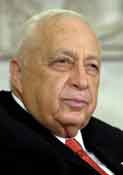
WARRIOR: Ariel Sharon
An Autobiography
With David Chanoff

I thought for this month’s book review I would examine Warrior, the autobiography of Ariel Sharon who was perhaps the most daring and successful commander in Israel’s extraordinary military history. During the short span since Israel’s founding, Sharon’s life of military and government leadership is reminiscent of many of our great leaders. Raising from ordinary circumstances this modern warrior became widely admired through a remarkably successful series of military and political achievements. Sharon was aided in his spectacularly impressive career by a personal force associated with his great physical and mental strength. It is safe to say that Sharon has been bigger than life in his country and on the world stage.

Ariel Sharon was born in 1928 in Israel of Russian immigrant parents who were known for their uncompromising strength, determination, and stubbornness. His father was an individualist in a socialist setting and that created an ill fit with their neighbors adding to the family’s already hard existence. The family, even though lacking money and material possessions, did maintain a rich cultural life revolving about the Russian heritage that they had been brought up to love. However, attempting to conquer the rugged land for agricultural purposes was the main effort of their everyday life.

Sharon’s and other Israeli village families outwardly held the prejudice that their farm children were superior. And, that purposeful but difficult existence derived from the soil during Sharon’s childhood and into adolescence formed a personality that was able to make decisions quickly, firmly, and clearly in the midst of battle or political turmoil. When at age seventeen he left home for military training that would begin the career of one of Israel’s great warriors, no one would have suspected his innate abilities or the scope of his future. But seldom would that be so for any as they are, without prior awareness, thrust into positions of major leadership relying mainly, during times of immense stress, upon the bedrock character developed from their youthful upbringing. Closeness to the soil creates a love for a country to defend it to one’s last full measure of breath. For Israeli’s there was no place else to go.

Modern terrorism against the United States upon its own soil began in the 1990’s and culminated September 11, 2001 with the attack upon the World Trade Center and the Pentagon resulting in 3000, mostly civilians, deaths. However, Israel has been a victim of such activity since its existence. Beginning in 1950 Palestinian terrorist groups began systematic raids within Israeli borders. Vehicles were ambushed, farms attacked, fields booby trapped, and roads mined and by 1956 nine hundred and sixty seven (967) Israelis were killed out of a population of about 1.5 million. This reign of terror was especially terrible during 1953 with over three thousand incidents, almost ten a day, with over 160 deaths.

Sharon was appointed commander of a newly created special anti-terrorist unit named Commando Unit 101 that was to be highly trained to kill and to destroy. This Unit was to strike at terrorist strong holds inflicting as many casualties as possible showing there would be a heavy price to pay for continuation of across border incursions. During the Unit’s development, Sharon showed and amazing grasp of organization, leadership, training, and tactical planning abilities. He always led from the field of battle rather than the command post. Sharon’s men came to have full confidence in him and would follow without hesitation. This was the beginning of his legendary military career, and the lessons learned by this initial terrorist-fighting cadre are still true. Today, we engage in practically the same fight; only time separates.

In Warrior, Sharon describes the major military battles that Israel was involved and in which he was a participant. His descriptions of the men, the battlefield, and the battles are lucidly described along with his role. Sharon had joined the Haganah at age fourteen, the Army at seventeen, and became an important player in all military operations from Independence through the Yom Kipper War of 1973. His discussion of the lead up to the Yom Kipper War was especially interesting. Reserves were mobilized and consisted of whole families where fathers had been participants in the early days of Israel’s founding battles and the sons had now become frontline soldiers as well. Many families lost both.

During the conflict, Sharon made one of his most famous and critical decisions that turned the tide of the War in Israel’s favor. The Israel Army could prevent an Arab victory only by crossing the Suez Canal in order to threaten the Egyptian forces in Sinai from their rear. Sharon’s division, with him personally in the lead, on the night of October 15 had taken on the most difficult, most complex, and the cruelest effort of the war by crossing the Canal. The crossing was described in Sharon’s final order of the day as the “…IDF’s greatest achievement…it brought victory.” In spite of headquarters’ doubt he made this most dramatic decision and was later vehemently attacked as a person who disobeyed orders. However, the Agranat Commission investigated and fully justified General Sharon’s actions stating that his decisions met the demands of military discipline.

Since Sharon had been called out of retirement for the Yom Kipper War, I would now like to briefly focus upon his civilian career as he returned to the political battlefield of the Knesset. He had previously been prominent in forming the Likud, a political Party to compete against the forty-five years of Labor dominance that was socialist in application. In 1981, as the Likud became successful, he was appointed minister of defense. Sharon continued to serve brilliantly and extended his reputation into the International arena as Israel prospered and as its military and commercial ties grew. There was much intrigue during that time as the Cold War was in full progress and the Middle East was an important battleground for both sides. Sharon’s description of this historic time reads somewhat like a spy novel as Communism and intrigue always threaten the fragile peace of the area.

Many of the particular occurrences described in Warrior will be familiar to C-133 crewmembers as a considerable number were participants in airlift missions relating to the events. In addition, our country as a whole was mesmerized by the depictions of the Wars on television. Sharon has described this important period in world history such that Warrior has taken its place among the most worthy and readable of modern historic documents. I have recommended it to several friends who have thoroughly enjoyed it for his informative description of significant happenings that have continued to elude resolution to this day. This we have lived.

Since Warrior’s publication in 1989, Ariel Sharon’s life has had many downturns and recoveries; and, one must turn elsewhere to learn of them. He was elected Prime Minister in 2001; endorsed The Road Map To Peace put forth by the United States; resigned from the Likud and formed another new political party in 2005 called Kadima; re-elected as Prime Minister; and, then on January 4, 2006, General Sharon suffered a massive stroke. He now lies in a long-term care facility having entered into a permanent coma with an extremely low chance of recovery.

His life was also filled with personal tragedies as he had a young son killed in a gun accident, lost his first wife, was severely wounded, had an ancient death curse placed upon him, engaged in a long libel battle with Time magazine, and was continuously involved in serious political controversy. But, through it all, he persevered to high command and sweeping victories that made him world famous. Sharon is well known publicly but Warrior helps one understand the private and complex personal side of this modern and outspoken Israeli military and political leader.

In order to obtain a critical overview here is a reference site that I suggest you peruse before you begin Warrior: Enjoy!

Click on: Wikipedia on Ariel_Sharon

Reviewed by:
Richard Spencer
39th ATS Dover AFB 1962-1965

Sunday, July 27, 2008

Agent Orange Legislation

HR 6562 - The Agent Orange Equity Act of 2008
Congress Must Act to Restore Earned Benefits
to All Vietnam Veterans - Including "Blue Water" Vets!

There are many MAC/MATS aircrew who flew into Vietnam but who never were on orders to a location in Vietnam. They have had a hard time establishing their eligibility for VA treatment for ailments presumed to be associated with Agent Orange.

Today, I received info on the legislation above. Check out http://veterans.house.gov/news/PRArticle.aspx?NewsID=290 for more detail and write to your congressional representative.

Cal Taylor

Friday, July 25, 2008

Cover Photo/Story

The current quarterly publication (Summer, 2008) of the Air Force Museum Foundation, "FRIENDS JOURNAL," features a dramatic cover photo of an RB-57 in the National Museum of the USAF, Wright-Patterson AFB, OH. Visible directly behind the RB-57 is C-133A, S/N 56-2008. And inside the magazine on Page 31 is the RB-57 story and another photo with a better angle showing the 133.

Here is their website photo of 2008:

Saturday, July 19, 2008

Sneak Preview

Coming Soon!
July Book of the Month

With this review, Rick Spencer puts a different spin on his theme of highlighting "ordinary citizens" who became military leaders with historical impact:

WARRIOR: Ariel Sharon
An Autobiography
With David Chanoff

(1928- )


Ariel (“Arik”) Sharon was born at Kfar Malal on February 27, 1928. He served in the IDF (Israel Defense Forces) for more than 25 years, retiring with the rank of Major-General. He holds an LL.B in Law from the Hebrew University of Jerusalem (1962).


Thursday, July 10, 2008

Getting close on N199AB

From John Burnett, 10 July


The Airplane will make only one stop and that will be at McChord. This stop is so that the timing is correct for the opening of the Air Show. The C-133 is due to arrive on Saturday August 30, 2008 at 10:30 am. It is scheduled to make several passes and then land and Taxi to a special roped off area. We are working hard on having a reserved area for former members of the 84th.

Now for the financial details that you are all waiting to hear.

WE NEED $ 67,000.00

WE HAVE $ 53,800.00 (as of 10:30 this morning)

WE NEED $ 13,200.00


So please help us bring 61999 home. We are so close and you can see lots of work has been put into this project so far.

Update on fuel fund for N199AB

Terry Juran tells me, this morning, that the cost of JP8 went up $1/gal, last week. The fund needs $67,500 to cover the fuel and has $48,825 on hand. That leaves another $18,875 to be raised by 1 Aug to make the Labor Day air show. Terry is contacting some other corporations that have been helpful in the past. I have a small piece in The Pacific Flyer that may also generate some interest.

Cal Taylor

Wednesday, July 9, 2008

Better Brochure

I have loaded the brochure to the Gallery page on the C-133 web site.

http://www.angelfire.com/wa2/c133bcargomaster/c133bgallery.html

The resolution is much higher. You can right click on each page of the brochure and save it to your computer. Then, you can print it out. Size it to 8.5 h x 11 w for the best rendition.

Cal Taylor

N199AB Brochure

I built a 3-fold informational brochure for the arrival day and for use with the airplane at the Travis Museum. It gives a capsule history of the C-133 fleet and of N199AB, both as 61999 and with Cargomaster, Inc., in Alaska. You should be able to get a better look by right-clicking on the image and then opening it in your favorite image editor. I'm working on the web site to post it in better definition.


Cal Taylor

Tuesday, July 8, 2008

N199AB Corporate Contribution

Among the contributions that have built the fuel fund to its current level was one from a European company for $10,000. They are simply interested in things aviation and saw this as a worthwhile project. I was asked to keep the name confidential but I have sent my personal thanks.

Cal Taylor

Saturday, July 5, 2008

Hamilton's Capital Compromise

Rick Spencer, our Book of the Month reviewer, has added a Comment to his June review about Alexander Hamilton. It's a fitting follow-up on this Independence Day weekend. Rick said:

"In the July 5 Wall Street Journal, page A11, there is an article about Alexander Hamilton and the compromise among him, Jefferson, and Madison to locate our capital in D.C.

The author states that Hamilton did more than any other to set the U.S. on a firm financial foundation. In other words Hamilton traded a capital location to ensure our capital wealth. Or, Capitol for capital; however, you might prefer to say it."

July 5, 2008 11:49 AM

To access the WSJ article, click on: "Alexander Hamilton's Capital Compromise"

To access Rick's original June review, click on: June Book of the Month

Wednesday, July 2, 2008

N199AB Update

Terry Juran tells me today that the fuel money is at 75% of what is needed, with a recent $10k donation. That is about $37k of the necessary $50K. So, another $14k or so is needed by 1 Aug to make the move happen. Thanks to all who have helped.

Cal Taylor

Tuesday, July 1, 2008

Update on N199AB

From John Burnett:

July 1, 2008

This is an update as of today on the PROJECT C-133.

The response has been overwhelming from so many of you, the former members of the 84th ATS/MAS.

Then to know that you have called upon friends, and the many responses from the information on Cal Taylor’s site has helped us to be able to say that we are almost halfway to our goal of [$50,000] being able to purchase the fuel to bring the C-133 to Travis. Cal comment: That is $25,000]

But do not stop at the half way point ---we MUST have the full amount by August 1st to assure that the arrival will be during the Labor Day Air Show at Travis.

SO PLEASE SEND YOUR CHECKS TO:

PROJECT C-133
TRAVIS AIR MUSEUM
400 BRENNAN CIRCLE
TRAVIS AFB, CA 94535

John and Jetta

June Book of the Month

Alexander Hamilton: A Biography
By
Forrest McDonald
Published as a Norton Paperback 1982

In my earlier notes published upon our C-133 site referring to this series of book reviews about ordinary citizens from ordinary backgrounds that stepped forth upon the National stage to defend and to ultimately play a major role in the development of our Country, I now turn to my favorite founder of America, Alexander Hamilton.

Alexander HamiltonThe major reason I turn to Hamilton is that his early political and economic theories led to the United States becoming the richest, most powerful, and freest nation in the history of the world. Each of us owes our richness of life to him alone as he struggled with his dream of allowing every citizen the freedom and chance to be all that one could be. Winning that struggle created the framework for this historic phenomenon we have with so many citizens from ordinary origins rising to such greatness in defense of the Nation.

Forrest McDonald, as he likes to say, spends his life in the 18th Century. As a professor of history at the University of Alabama, he has authored numerous texts about America’s gestation and among those was the biography of Hamilton. His interest in doing so was because of his surprise at Hamilton’s treatment by other historians who professed neither expertise nor interest in the areas of Hamilton’s greatest contributions: economics, finance, and the law. Also, all had failed to delve into the development of Hamilton’s intellectual life that led to his prescient national and worldview.

How did Hamilton come to dream the dream about an effective and enduring national government that would set its citizens free to act in their own best personal and economic interest but retain the desire to defend the country with their last full measure of devotion? McDonald notes our early history was failing to reward man’s individual industry as status came from personal relations, family connections, ownership of land, and birthright. Hamilton had none of these and felt it was inherently unjust for those citizens in a Democracy to be encumbered by such a social order. Hamilton’s genius was to devise an economic system based upon money as money is blind and is the ultimate, neutral, impersonal arbiter that stimulates growth, change, prosperity, and national strength. Here, the fruits of one’s labor would justly reward industrious citizens, as money would become the universal measure of the value of things.

Hamilton accomplished this miracle in the face of severe resistance, especially from Jefferson and his followers. This fascinating and definitive biography of Alexander Hamilton by Forrest McDonald vividly describes the efforts by Jefferson, the Jefferson heirs, and the Jacksonian Democrats to destroy effective national government in order that each state could make its own rules. Those in the South adopted Jeffersonian rules and their society rested upon the land, upon slavery, and upon the exercise of force without the impartial restraint of law. Others adopted Hamiltonian rules and their society rested upon the market, free labor, contractual relationships, and law. The Civil War brought about the triumph of Hamilton’s way leaving the Jeffersonian South in disrepair for decades.

More so today, Hamilton’s one-man mission would seem an unlikely and impossible task; but, it is the early history of our country and it was the success of his personal leadership and intellect. McDonald notes that the American nation reached the peak of its Hamiltonian greatness in the middle of the twentieth century and after that it became increasingly Jeffersonian. He further notes we became governed by coercion and the party spirit, our people increasingly more dependent and less self-reliant, our decline candy–coated with rhetoric of liberty and equality and justice for all.

Hamilton would have “cried for his country” as his dream was slowly destroyed by modern political parties seeking power through a strategy that would institutionalize massive federal government largess rather than continuing with the limited, but effective, federal role that provided a fluid and orderly society open to merit. National elections have now become a focus to redistribute the levied wealth that was personally earned through the industry of its citizens further empowering political parties. That would certainly be an anathema to Hamilton.

Today’s deviation from the original principles of Hamiltonian theories that were designed to provide an orderly society through a limited federal role to defend the country, to provide for interstate commerce, and to negotiate international affairs of State has presently divided the country to the extent that it borders upon political paralysis. Currently, congress is the least trusted of any of our major political and national institutions. If Hamilton’s vision is forever denied, what replaces it?

Alexander Hamilton died July 12, 1804 after suffering a bullet wound the previous day in a duel instigated by Aaron Burr. At the early age of 47 one of America’s most prodigious founders had fallen to the ‘code duello’. Hamilton thought the challenge was brought about by fifteen years of an acrimonious political rivalry between the two where Hamilton had repeatedly thwarted Burr’s ambition. Hamilton considered Burr irresponsible and lacking serious principle. But, the prejudices of the country would have regarded Hamilton as a coward had he not accepted Burr’s challenge and he would have forever been denied the prospect of future public service. It is not known whether Burr miscalculated in firing as gentlemen and men of honor usually and deliberately missed and Hamilton had made that his intention to Burr. McDonald sadly writes, “About two o’clock in the afternoon of July 12, his Maker took him.”

If you are interested in the political and economic foundations of early America, this is the book for you. To find out more about it, and buy it for $2.60, click on: ALEXANDER HAMILTON: A BIOGRAPHY

Reviewed by:
Richard L. Spencer
39th ATS, DAFB
1962-1965

Wednesday, June 25, 2008

N199AB update

June 25, 2008

Here is the latest on the C-133 move to Travis Air Museum.

We just spoke with Terry Juran from the museum and he is very upbeat on the response we have had from former C-133 members and their families! He was able to secure a greatly reduced price for the fuel by including the C-133 as a participant in the Air Show at Travis Air Force Base over Labor Day weekend.

From the promised donations and from the Travis Air Museum Board who pledged $5,000 during its Board Meeting this weekend, we appear close to one third of the total dollar amount we need for fuel.

If you are able to contribute, donations must reach Terry by August 1, 2008 to make the Labor Day event. Donations can be sent directly to:

PROJECT C-133

TRAVIS AIR MUSEUM

400 BRENNAN CIRCLE

TRAVIS AIR FORCE BASE, CA 94535

Here are some answers to your recent questions:

Q: If the funds donated exceed what is needed for fuel, how will it be spent?

A: All PROJECT C-133 designated donations received by the Air Museum will be placed in a special account and used for the C-133 only. The account will be used for expenses such as restoration, maintenance, site preparation, etc.

Q: Was the C-133 in Alaska ever assigned to Travis Air Force Base?

A: We have verified that 60199 was assigned to Travis Air Force Base from February 1960 to November 1960.

Q: What social activities are planned for the C-133 arrival on Labor Day weekend?

A: We are still in the planning stages of any social activities. Watch for regular updates for more information.

Thanks to those of you who have pledged donations to this project! We are excited and optimistic about Travis AFB displaying the C-133.

We welcome any questions you may have.

John and Jetta Burnett

jnburnet@cwnet.com

Boeing 40 Video

Thanks again, Sandy Sandstrom, for bringing us this fascinating "little piece of aviation history." Click on: Pemberton Restoration Boeing 40C Video

Also, check out this website: Boeing 40

Excerpt:
This is a picture of our Boeing 40C, 5339, in 1928 shortly before its crash in the Oregon mountains.

Tuesday, June 24, 2008

N199AB Fuel to Travis

An update from Terry Juran, at the Travis Museum. He can get fuel for $3.04/gal, vice $6. About 16,000 gallons are needed and money to get the Alaska crew home. So, about $50,000 is the goal. He is contacting various potential sponsors, I have had input from other possible sponsors and have written to a person who has put lots of money into aviation projects. One of my contacts is going to submit my short article on the move to Pacific Flyer. Things are moving toward the goal of a Labor Day arrival with several low passes.

Sneak Preview

Coming Soon!
June Book of the Month

Alexander Hamilton Alexander Hamilton

Alexander Hamilton was one of the most influential of the United States' founding fathers. As the first secretary of the treasury he placed the new nation on a firm financial footing, and although his advocacy of strong national government brought him into bitter conflict with Thomas Jefferson and others, his political philosophy was ultimately to prevail in governmental development. Hamilton's own career was terminated prematurely when he was killed in a duel with Aaron Burr in 1804.

Thursday, June 19, 2008

N199AB to Travis

Just in from John Burnett

June 18, 2008

Here is the latest information we have on the delivery of the Alaskan C-133 to Travis Air Force Base.

Travis Air Museum will be receiving the C-133 from Alaska along with two additional C-133s from the Mojave Desert. The plans are to have the one from Alaska arrive at Travis during the Air Force Celebration over the Labor Day Weekend.

The two that Travis will receive from the Mojave are not flyable and will be used for spare parts. There are plans to remove the fight deck from one of them and install it inside the museum. The museum hopes to involve former crew members in this project (more information on this when it becomes available).

The biggest challenge the museum has at the present time is the fuel purchase to fly the plane from Alaska to Travis. [Cal comment: 18,000 gallons for unpressurized flight of 7:55 plus reserves will cost about $108,000].

The museum has received a donation of $5,000.00 from a former C-133 crew member. This member is challenging other former members for donations, up to an additional $5,000.00, which he will match.

So many of you have asked how you can help. To make your donation, please send a check or money order to:

C-133 PROJECT
TRAVIS AIR MUSEUM
400 BRENNAN CIRCLE
TRAVIS AIR FORCE BASE, CA 94535

Those who donate $250.00 or more will have their name placed on a donation plaque in the C-133 area of the museum.

Terry Juran from the Travis Museum will be in Alaska next week to inspect the
C-133 and we are hoping to post pictures on this site when he returns.

Spread the word and please send any questions to us:

John and Jetta Burnett
Jnburnet@cwnet.com

Friday, June 6, 2008

Fuel Burn

For anyone out there who remembers performance figures:

Put on your engineer's cap for a minute and give me some round figures ( I figure you don't even need the Dash One Dash One to do this). The big ticket item to get N199AB from Anchorage to Travis is fuel.
The direct flight from Anchorage to Travis takes 6:55 at 250 knots. A route via overhead McChord required 7:13. Adding 1:30 for reserves, that gives a maximum of 8:43, so round off to 9:00 fuel required. Jet-A fuel is running about $6/gal. What is the burn rate for a flight at 10000 or 15000 (I don't know if they would choose to go pressurized or unpressurized. Would it save fuel to fly unpressurized? In any case, how much fuel would be needed to cover 9:00? What is the total cost?

Let me know at firstfleet@aol.com.

I want to see if any fund-raising is an option.

Cal Taylor

Wednesday, June 4, 2008

Emer Procedures Tng Film

An email from Tim Elliot (lastgasp@aol.com), son-in-law of Maj. Tom Miller.

"He flew the C-133 for a number of years.

As it happens, he appeared in a 16 mm Air Force training film, and I'm trying to track down a copy for him.

What: 16 mm training film titled "Emergency Procedures for the C-133A"
Who: U.S. Air Force Photo Mapping Squadron, which at the time operated out of Orlando
Where: I hope you can tell me...
When: Filmed in 1961 or 1962 and distributed for some years thereafter "

Tim says he has had no luck in AF channels, so hopes a private party might be the key.

Anyone out there who might have or know where to find this or any other C-133 training film. Traditions has only a couple, just of the roll-out and arrival at Dover.

Cal Taylor

Tuesday, June 3, 2008

N199AB/61999 Update

This is a summary of what I have learned about the potential move of N199AB/61999 from Anchorage to Travis AFB. The Jimmie Doolittle Museum has received a letter of intent to transfer the airplane. Two big issues are gathering funds to repaint the airplane in military markings and to pay for the fuel. Assuming that those are accomplished, the concept is to have the airplane arrive during a Labor Day air show at Travis. There are still lots of hoops to be jumped through to make it happen, but there are good prospects for the last airworthy C-133 to go home. 61999 was assigned to Travis from Feb to Nov 1960.

Cal Taylor

Friday, May 23, 2008

SR-71 Blackbird

The following provided by Bob Becht, AC, 1st ATS, '62-'65. Commentary author not identified:

The SR-71 in the first photo below is in the National Museum of the Air Force, Wright-Patterson AFB, Dayton, Ohio. This particular plane flew the first operational mission, and has the most operational time of any SR in the fleet.


In April 1986, following an attack on American soldiers in a Berlin disco, President Reagan ordered the bombing of Muammar Qaddafi's terrorist camps in Libya. My duty was to fly over Libya and take photos recording the damage our F-111's had inflicted. Qaddafi had established a 'line of death,' territorial marking across the Gulf of Sidra , swearing to shoot down any intruder that crossed the boundary. On the morning of April 15, I rocketed past the line at 2,125 mph.

I was piloting the SR-71 spy plane, the world's fastest jet, accompanied by Maj Walter Watson, the aircraft's reconnaissance systems officer (RSO). We had crossed into Libya and were approaching our final turn over the bleak desert landscape when Walter informed me that he was receivi ng missile launch signals. I quickly increased our speed, calculating the time it would take for the weapons-most likely SA-2 and SA-4 surface-to-air missiles capable of Mach 5 - to reach our altitude. I estimated that we could beat the rocket-powered missiles to the turn and stayed our course, betting our lives on the plane's performance.

After several agonizingly long seconds, we made the turn and blasted toward the Mediterranean . 'You might want to pull it back,' Walter suggested. It was then that I noticed I still had the throttles full forward. The plane was flying a mile every 1.6 seconds, well above our Mach 3.2 limit. It was the fastest we would ever fly. I pulled the throttles to idle just south of Sicily , but we still overran the refueling tanker awaiting us over Gibraltar.

Scores of significant aircraft have been produced in the 100 years of flight, following the achievements of the Wright brothers, which we celebrate in December. Aircraft such as the Boeing 707, the F-86 Sabre Jet, and the P-51 Mustang are among the important machines that have flown our skies. But the SR-71, also known as the Blackbird, stands alone as a significant contributor to Cold War victory and as the fastest plane ever-and only 93 Air Force pilots ever steered the 'sled,' as we called our aircraft.

The plane was dripping, much like the misshapen model I had assembled in my youth. Fuel was seeping through the joints, raining down on the hangar floor. At Mach 3, the plane would expand several inches because of the severe temperature, which could heat the leading edge of the wing to 1,100 degrees. To prevent cracking, expansion joints had been built into the plane Sealant resembling rubber glue covered the seams, but when the plane was subsonic, fuel would leak through the joints.

In 1962, the first Blackbird successfully flew, and in 1966, the same year I graduated from high school, the Air Force began flying operational SR-71 missions.

The SR-71 was the brainchild of Kelly Johnson, the famed Lockheed designer who created the P-38, the F-104 Starfighter, and the U-2. After the Soviets shot down Gary Powers' U-2 in 1960, Johnson began to develop an aircraft that would fly three miles higher and five times faster than the spy plane-and still be capable of photographing your license plate.
The SR-71 was an expensive aircraft to operate. The most significant cost was tanker support, and in 1990, confronted with budget cutbacks, the Air Force retired the SR-71. The Blackbird had outrun nearly 4,000 missiles, not once taking a scratch from enemy fire.


On her final flight, the Blackbird, destined for the Smithsonian National Air and Space Museum , sped from Los Angeles to Washington in 64 minutes, averaging 2,145 mph and setting four speed records.


The SR-71 served six presidents, protecting America for a quarter of a century. Unbeknownst to most of the country, the plane flew over North Vietnam , Red China, North Korea , the Middle East, South Africa , Cuba , Nicaragua , Iran , Libya , and the Falkland Islands. On a weekly basis, the SR-71 kept watch over every Soviet nuclear submarine and mobile missile site, and all of their troop movements. It was a key factor in winning the Cold War.


I am proud to say I flew about 500 hours in this aircraft. She defeated every missile, outran every MiG, and always brought us home. In the first 100 years of manned flight, no aircraft was more remarkable.

Author Unknown

Thursday, May 22, 2008

C-133 Replacement

Thanks to Sandy Sandstrom, here's a great Lockheed-Martin, 3 minute video of the C-5 Galaxy. Just click on the Play button:


Monday, May 19, 2008

Ed Elias, 1972 POW

Some of you may remember Ed when he was a Navigator in the 39th ATS in the early 60s. This is the bizarre story of his POW experience in 1972:

ELIAS, EDWARD KNIGHT

Name: Edward Knight Elias
Rank/Branch: 04/US Air Force
Unit:
Date of Birth:
Home City of Record:
Date of Loss: 20 April 1972
Country of Loss: North Vietnam
Loss Coordinates: 172400N 1063400E
Status (in 1973): Released POW
Category:
Aircraft: RF4C

Other Personnel in Incident: None missing

Source: Compiled by P.O.W. NETWORK 06 September 1996 from one or more of the following: Raw data from U.S. Government agency sources, correspondence with POW/MIA families, published sources, interviews.

REMARKS: Released Hanoi 720925

VIETNAM [magazine]: June 1996

PERSONALITY:

In a bizarre incident, Air Force POW Ed Elias was freed through the
propaganda efforts of American collaborators.

By Carole Hack

Major Ed Elias was captured three days after he and his backseater ejected from their burning McDonnell F-4C fighter over North Vietnam. Although Elias evaded one surface-to-air missile (SAM), a second hit them.

Elias saw no one the first day. The second day, searchers came very close to him. On the third day, he decidded to leave his secure hiding place and move across the river, to get away from the populated area and establish communications. He was captured near the river later that afternoon by North Vietnamese Army (NVA) troops. "If you're going to be captured," Elias said, "you're better off with regular army that understands the importance of an American prisoner."

After the NVA soldiers stripped and searched him, they gave him back his flight suit, but not his boots. They marched Elias out with tied wrists. After they were out of the jungle, they blindfolded him. He lay down in a truck and rode about 30 minutes to a holding area, where they interrogated him.

At one place, the captors stopped and displayed their prisoner to the local people. Some of the locals poked at him with sticks. One guard tried to push them away, but they persisted. To Elias' relief the soldiers reappeared and left with him in tow.

At one point on the journey, Elias' captors stopped on the road and told him to dig a hole. A car pulled up bearing an officer and a civilian with a camera, who took a picture of Elias. The photo was later published in a newspaper with a caption saying this was an American digging a foxhole to protect himself from American bombing attacks. Elias was told he was digging his own grave.

His guards were singing Ho Chi Minh songs and Hanoi was ablaze with lights as Elias entered the city in the evening, 3 1/2 days after his capture. That was a low point for him. He could not believe the city was lit up, rather than hiding in fearful darkness.

Elias was taken to Hao Lao, the old French prison known to its inhabitants as the "Hanoi Hilton." First stop was "New Guy City."

The people most likely to have current military information were "the new guys," the new prisoners, said Elias. The American military knew U.S. fliers could be shot down, so they changed military information all the time. While new prisoners were subjected to intense interrogation, the captors eventually moved on to things that could be used for propaganda purposes.

For the first week, Elias was interrogated day and night. They tied him up, threatened him, said they would release evidence to show he had been killed, kept him awake, and generally wore down his endurance. Since his capture, he had been interrogated by Russians, Eastern Europeans, a Cuban, and a Vietnamese with a French accent.

New Guy City was all solitary confinement. Elias was first confined to a big room, about 20 by 20 feet. On the high ceiling was a loudspeaker and a light that was always on. The walls were plaster over lath. The floors were stone. In the center was a concrete pedestal two feet off the floor that served as a bed. There was a door with bars on the window. After a week, Elias' captors left him alone for awhile. He was then moved to a smaller room in New Guy City. After four months, he was taken to another camp, name CuLoc, "The Zoo." It was a former French movie studio converted to a prison. There, rooms were about 10 by 5 feet with a concrete pedestal in the middle and a bamboo mat. A mosquito net was a welcome addition because it protected him from rats as well as from mosquitos.

Prisoners at the Zoo were fed twice a day. In the morning they got a cup of powdered milk and a piece of bread. The bread was dotted with pink spots, with a weevil in the center of each pink spot. Some prisoners picked out the weeils, but Elias ate the bread, weevels and all, because it supplied more protein. The second meal was served around 4 p.m. It was soup made from local vegetables in season. This could be turnip greens, pumpkins, potatoes, or squash. Sometimes there was pig fat in it, with the hair still on the skin side of the pig.

The prisoners wore clothing that was either maroon or gray striped. Shoes were thong sandals made from old tires. Toilet facilities were a bucket. The sandals could be set on the rim to serve as a seat.

Although the prisoners could not see one another, their routines were such that when one prisoner was led off to a weekly four-minute bath at a well, another prisoner would empty the absent prisoner's bucketl. Sometimes this routine offered an opportunity to leave a message scratched on a piece of soap or paper. The prisoners called them "drops."

Another form of communication was tap code. Prisoners memorized the alphabet in the form of a grid, with each letter having a number equivalent that was determined by its position on the grid. Then they tapped out a message. The Vietnamese knew the code too, but they couldn't have someone listening in every cell all the time.

The best time to communicate was in the midst of confusion. The guards were frightened by bombing raids and would hide until the all-clear. During such times, the prisoners would yell to one another.

Elias kept his eye on the piece of sky in his window at The Zoo. One dahy he saw an airplane shot down. He established the date. (Guards who spoke English were willing to tell prisoners the date.) Years later, he learned the downed pilot had escaped. Unless another pilot was shot down on the same date, the pilot was Bud Breckner, who later would be Elias' wing commander at Williams Air Force Base.

One day Elias was blindfolded and put in a vehicle with another blindfolded American, Jim Padgett. They were taken into a room and seated at a table; their blindfolds removed. They saw five or six other prisoners sitting there, Minutes later, in walked Jane Fonda.

She talked 30 to 45 minutes about why she came to North Vietnam. She stood in front of the men and lectured them about committing genocide, destroying civilian targets and committing other atrocities. Fonda said she would be broadcasting a message asking their fellow American fliers to refuse to fly sorties against North Vietnam. She dwelt on how much the people of the United States were against the war.

Later, Elias listened to what he thinks was a tape of the same speech broadcast over the loudspeaker in his cell.

Elias was not taken to hear former Attorney General Ramsey Clark speak, but once again tapes were played over the loudspeaker in his cell. Clark said how wrong the United States' actions were in the eyes of international law.

Those experiences were a low point in Elias' entire POW experience. He threw his sandals at the loudspeaker again and again in his cage.

"We were really pumped up for the cause," he recalled. "We wanted South Vietnam to have the right to be free. Here these Americans were coming over and telling us we were criminals."

One night someone came to Elias' cell and told him to put on his clothes and come along. Elias was taken to the interrogation room, where another man was sitting. "Some Americans are coming to see us," the man said. After the two men had sat there for a long time, an interrogator, who had been nicknamed "the Weasel" while at the Hanoi Hilton, appeared. He told them, "In honor of [some Vietnam holiday] and the benevolence and memory of our beloved president and the goodwill of the American people, we are going to release some prisoners." After that, Elias was returned to his cell. He was called back again the next day, and the release progressed from there.

The actual circumstances of Elias' release were a mystery to him at the time. The people who came to release him referred to themselves as "the Coalition." They included Cora Weis of the Faberge' family; David Dellinger of the Chicago Seven; William Sloan Coffin, a Yale University chaplain; and Professosr Richard Falk. They were accompanied by NBC correspondent John Hart and Associated Press correspondent Peter Arnett. Elias says the whole thing was a propaganda effort to show that the Coalition could deal with the North Vietnamese government and the American government could not.

"I didn't know who these people were," he said. "I only knew I wanted to get back to the military." When he learned the Coalition was intent on preventing the military from "capturing" him, he got up from their table and left the room. A North Vietnamese political officer stopped him and said, "That is not intelligent."

Elias and the Coalition flew from Hanoi to Beijing. Arnett had given Elias the telephone number of the satellite communication system that President Richard Nixon had used on his recent trip to China. When Elias walked into his hotel room, he picked up the telephone and dialed that number. A switch operator picked up the call in New York and passed it through to Elias' wife in Valdosta, Ga. "We talked no more than two minutes," Elias said. "no one eger knew except Peter Arnett, who was in the room when I called."

From Beijing the group flew to Moscow where Adolph "Spike" Dubbs was the American charge'd'affaires. Elias said, "He was wonderful." After a conversation with Dubbs, Elias decided to be quiet. The group flew fromm Moscow to Copenhagen and then on to New York, where Elias was finally reunited with his wife and family.

[Disributed through P.O.W. NETWORK]